Margaret Fuller Society Birthday Fundraiser

HAPPY BIRTHDAY MARGARET!!

Let’s honor Margaret Fuller’s 216th birthday (May 23, 2026) by celebrating intellectual community, social reform, and the transcendent processes by which individuals grow into themselves. 

The Margaret Fuller Society encourages FB posts and listserv messages sharing your actions in these areas. AND we encourage you to donate $21.60, $43, $216, or any amount to the Margaret Fuller Society. Donations for the fundraiser will be used to fulfill the mission of the Society, including its new and expanding number of awards: the Phyllis Cole Award for Social Service and the Teaching to Racial Justice with Margaret Fuller Award, both of which you can read about here. We also will donate 25% from the fundraiser to the Margaret Fuller Neighborhood House, in recognition of their ongoing community service.

If you have questions about donations, please contact Lisa at lisa.west@drake.edu

We thank you for your support of the society’s work and for sharing the life, legacy, and contributions of Margaret Fuller with others.

Teaching to Racial Justice with Margaret Fuller

The Margaret Fuller Society announces a teaching award to support racial justice:

Teaching to Racial Justice with Margaret Fuller

The MFS Committee for Racial Justice welcomes entries that:

  • outline a syllabus including writing by Margaret Fuller and explain how Fuller’s work fits into the semester’s aims, including support of racial justice
  • describe a classroom activity or series of exercises that use Fuller’s writing to teach to issues of racial justice
  • detail a paper assignment that focuses on racial justice and engages Fuller’s writing
  • plan a community project that addresses racial justice and Fuller’s writing
  • propose a nontraditional pedagogical approach to racial justice issues through Fuller’s writing

Submissions should be limited to one page.

We especially encourage entries that engage critical race theory.  We welcome submissions from both members and non-members of the Society and urge graduate students to consider submitting.

The winning submission, as judged by the Society’s Committee for Racial Justice, will receive a small monetary award and be featured in Conversations, the publication of the Margaret Fuller Society.  The award will be presented at an online gathering in late summer.

Send submissions to katopodis [dot] christina [at] gmail [dot] com 

Deadline Extended: 31 July 2026

I Will Teach It For You

In collaboration with the Margaret Fuller Society, the Thoreau Society, Transcendental Concord, and a range of public thinkers and scholars, we invite you to adopt and share texts that are being censored or threatened. This mutual aid teaching exchange invites cultural workers in secure regions or positions to carry forward the intellectual passions of their colleagues who face political repression. We also aim to build a supportive community across regions and professions to support colleagues working under such restrictions.

How it works:

  • Someone will submit a text that they wish they could teach, share, purchase, or talk about but feel unable to do so due to political restrictions or pressure. You can submit a text at this link.
  • A second participant will “adopt” one of these texts that they are able to share, and will share it. As we collect responses, they will become visible at this link. You can sign up to adopt a text at this link.

What counts as teaching? Do I have to be a professor?

  • Many things count as teaching. You do not have to be a professor.
  • Examples of teaching a text might include giving the text as a gift, checking it out from a public library, posting about it online, recommending it to a friend, or adding it to your website.

Who can submit?

  • Anyone! Texts might be submitted by teachers, tour guides, librarians, public historians, or book club members. You can submit a text that you are unable to teach or a text that you know has been censored from the news or from colleagues.

Who can adopt?

  • Also anyone! We particularly invite adopters who have the institutional power, financial security, or regional protections to exercise free inquiry and weather criticism, including volunteer cultural workers, faculty emerit, tenured teachers or faculty, and folks in regions and institutions with robust free speech protections.

Why would I want to adopt a text?

  • This is a great chance to stretch your range of expertise, refresh your syllabus, or learn about new passions. It’s also good to have a concrete and manageable action you can take in the face of the stress created by threats to higher education.

Can I connect with the person who submitted/adopted this text?

  • Yes! We have set up a private avenue to help submitters and adopters connect if they both express interest in doing so.

Can I make my teaching public or available to the person who submitted and their community?

  • Great idea! You might consider sharing an op-ed, personal blog post, webinar, or informal conversation about your teaching experience or the text. We would love to help you brainstorm and organize this in collaboration with the submitter of your text!

What if I’m worried my institution/employer/government will be mad at me for submitting a text?

  • You always have the option to submit anonymously. If you want to attach your name but remain private, we will protect your name from public circulation, sharing it only with your permission. All submissions to this project go to an email managed by leadership of the Margaret Fuller Society.

Does this help the students or audiences who are being restricted from accessing this text or ideas?

  • Possibly. We don’t really know. By amplifying a text, we hope that it 1) will become or remain relevant to a discipline so that people who use the text in the future will be able to make a better case against its censorship and 2) will increase circulation of the text in non-academic spaces where audiences are more likely to encounter it, including in regions or institutions with political restrictions.

I have a critique, an idea about a better way to do this, or an idea about something you could do instead.

  • Fantastic! We want feedback and need help. Please reach out at authorsocietycollaboration [at] gmail [dot] com

We particularly want to acknowledge the work of the Just Teach One project by Duncan Faherty and Ed White, whose model of collaboration inspired this project.

MLA 2026 Recap

Members of the Fuller Society gathered in Toronto, Canada to give a variety of presentations. On the first day of the convention, Christina Katopodis (Second Vice President) presented on Thursday, January 8, “Unfurling Taxonomies: Margaret Fuller’s Responses to Science in ‘Magnolia of Lake Pontchartrain'” on a panel focused on the relationship between literature and taxonomy.

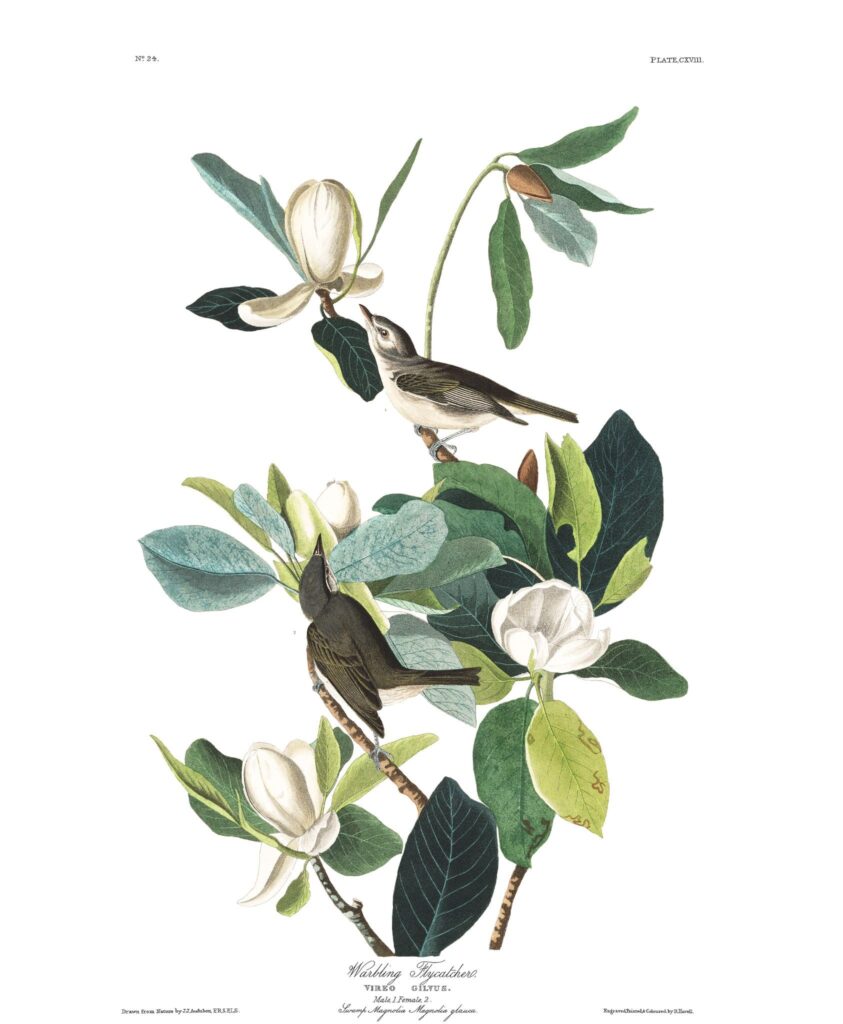
Illustration by John James Audubon (1785-1851) of two warbling flycatchers on a magnolia branch. The branch features several of the dramatic, large white blossoms and the green rubbery leaves of the magnolia grandiflora.

On Saturday, January 10, our Fuller Society sponsored panel, “Margaret Fuller and Nineteenth-Century American Women Writers Observing Nature, Engaging Science,” featured papers by Alice de Galzain (MFS Advisory Board), Thomas Howard, and Maxime Fecteau and was presided by Christina Katopodis.

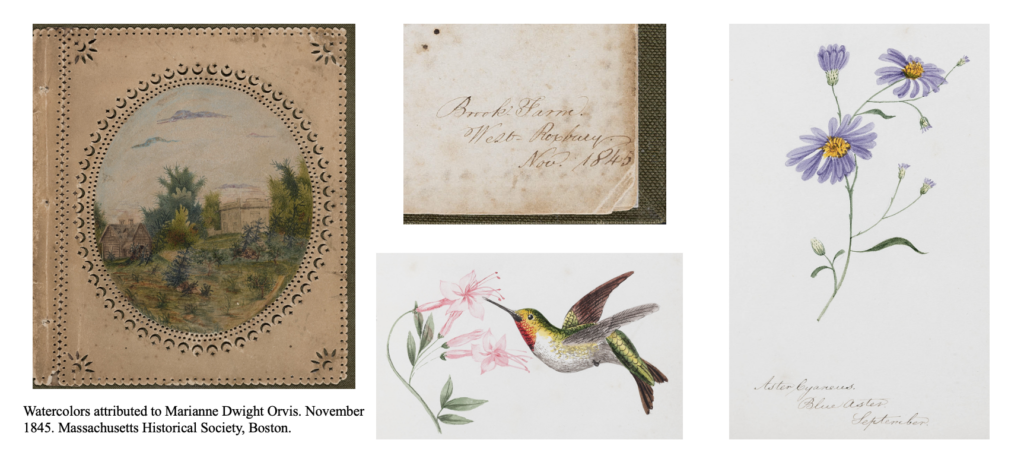
de Galzain spoke about “The Possibility of Mutual Flourishing” in the works of Margaret Fuller, Caroline Healey Dall, and Marianne Dwight Orvis, emphasizing female agency in Fuller’s short story, “Yuca Filamentosa” (1842), Dall’s Historical Pictures Retouched, and Dwight’s watercolors. de Galzain, through the lens afforded by Sarah Ahmed’s work on emotion, highlighted the important lesson of “wait and trust” in botany.

Several examples of watercolors including flowers, a garden, and a hummingbird, as well as a signature.

Howard’s paper focused on Emily Dickinson and the poetics of science, inviting us to “think botanically” with Dickinson, emphasizing plant agency. He traced Dickinson’s scientific thinking through her correspondence, and framed her scientific thinking in poetry as the art that “precedes science”–Charles Darwin writes that art precedes science because it is “experience & observation.”

Fecteau presented, “What Mystery Pervades a Well!”: Lynn Margulis in Conversation with Emily Dickinson” and delighted us with Margulis’s poetic thinking about microbiology and symbiosis. Margulis lived next door to Emily Dickinson’s Amherst homestead, claimed to “hear” Dickinson during her walks through Amherst, and wove the poet’s verses into her scientific presentations.

On Saturday January 10, Koritha Mitchell read aloud Eagan Dean’s remarkable presentation, “Against the Clinical Gaze on Life Writing: Louisa May Alcott and Self-Narrated Gender,” which was followed by great interest and robust discussion. Jay Grossman commented that it was a “provocative” and “convincing” paper.

MFS members and panelists convened for a Fuller Society lunch and dinner on Saturday when we were able to continue our conversations. It was such a joy for all of us to be together for a large part of the day, and it often felt as if our fellow members were there with us as we shared stories and admiration for our colleagues and friends.

On Sunday, January 11, MFA Member Ariel Silver presided on the panel, “Family Resemblances: Hawthorne’s Extended Bloodlines.”

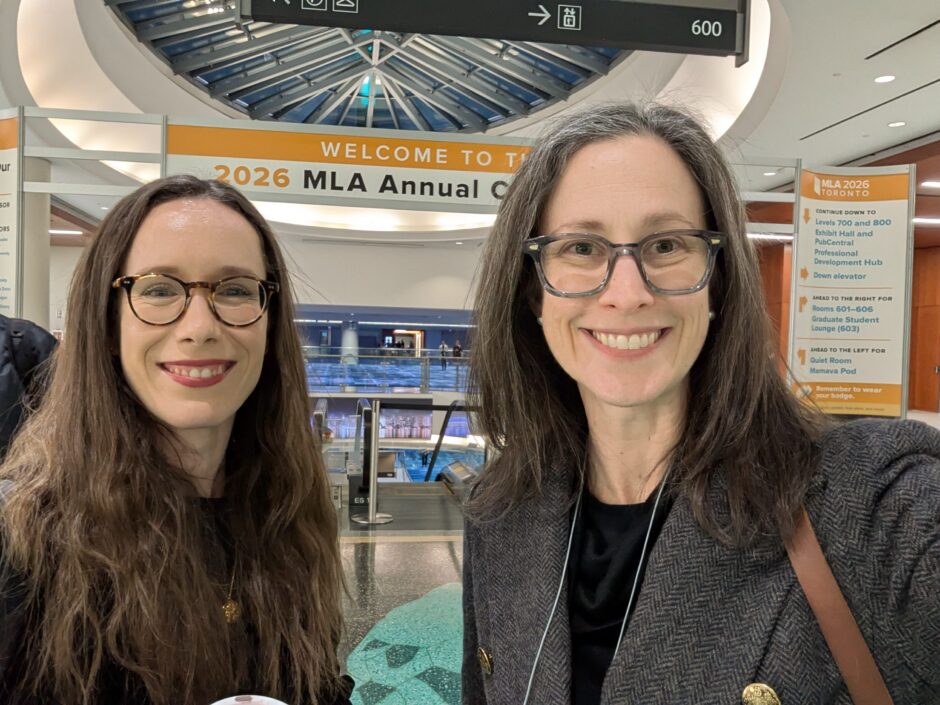
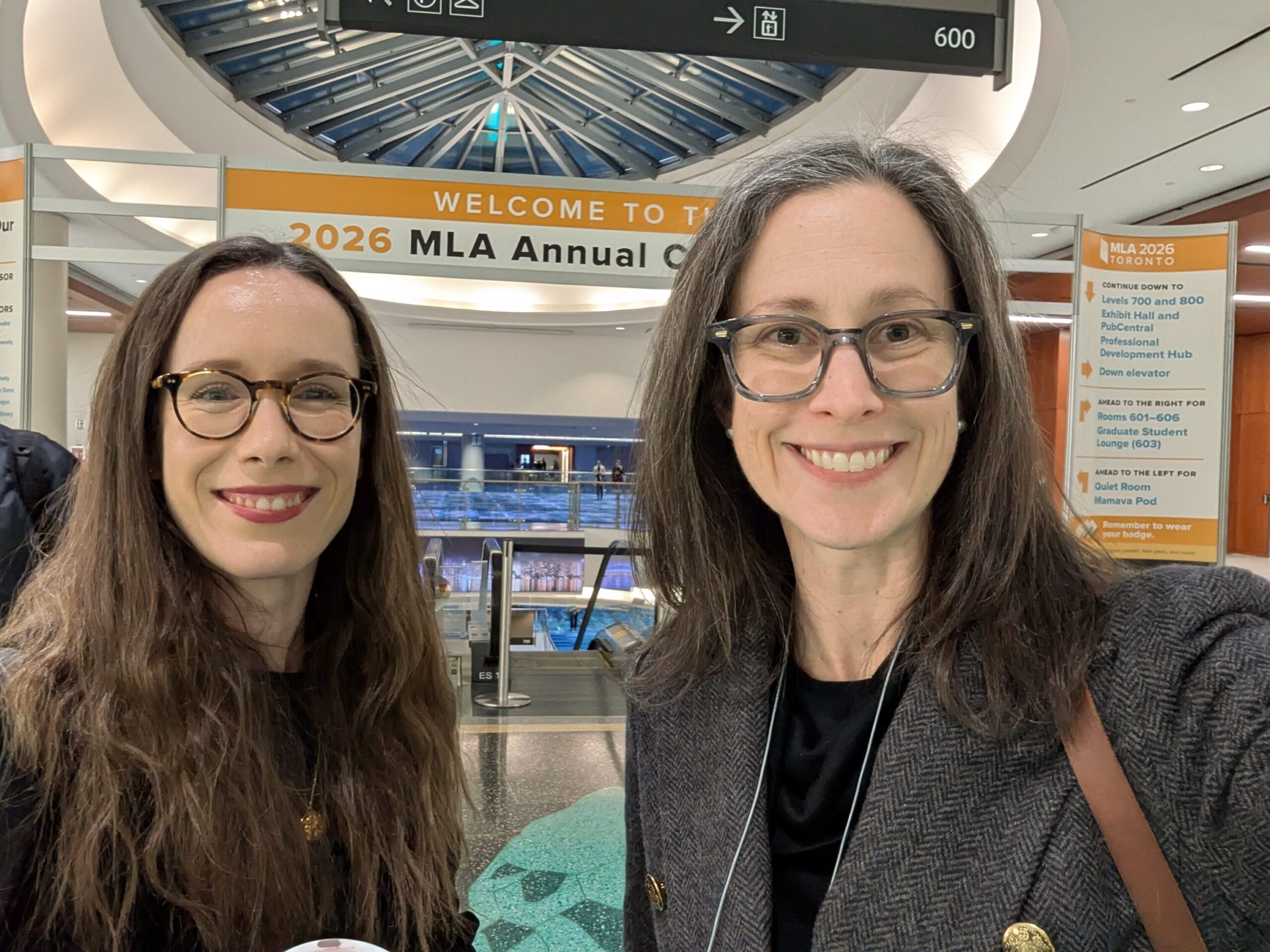
Two women stand smiling in front of the 2026 MLA Convention banner

3 Major Calls and Opportunities for Fullerenes and Friends

Call for Submissions to Conversations

Margaret Fuller Society’s Special Issue on “Protest”

The theme of the next issue of Conversations (Vol 6.2) is of the moment: Protest. We ask our contributors to reflect on what protest means both to you and to our nineteenth-century forebears whose thinking laid the groundwork for much of ours. We will publish long pieces and short, archival excerpts from the work we study, and reports on our and our communities’ protest efforts. You are welcome to publish anonymously (extravagant/fanciful pseudonyms welcome) if you so prefer, especially if your career might be in peril for speaking out. Please use your imagination, your creativity, and your hearts to help us move forward collectively into a world that is kind, just, and loving.

Please note: Although Conversations is not blindly peer-reviewed, our editorial team reviews all submissions and, in the case of acceptance, offers revisions as needed.

Deadline: February 28, 2026.

Email for submissions, proposals, and questions:

mfsconversations@gmail.com

Peruse previous issues of Conversations.


CFP for an MFS-Sponsored Panel at the 2026 Thoreau Society Annual Gathering

Trouble and Recovery:  Health in Margaret Fuller’s Life and Society

The Margaret Fuller Society is pleased to sponsor a panel for the upcoming Thoreau Society Annual Gathering in Concord, MA, July 8-12, 2026, complementing the overall conference theme, “Living Well: Thoreau, Health, and Flourishing.” Both health and the forces opposing it had powerful resonance in Fuller’s life and thought. As she wrote in the New York Tribune, “cancer on the body must in time affect the head and heart also.”*  The words of our title, “Trouble and Recovery,” encompass both obstacles to health and its restoration, in Fuller’s personal life or the family and society within which she lived, in body or “head and heart,” whether descriptive or metaphoric in significance. Proposals might, for example, focus on her struggle with headaches, early experiences of loss, record of dreams, nursing experience in Rome, pregnancy and childbirth, strategies of recovery and reform. So might they focus on any method of treatment she experienced, traditional or experimental, on the circumstances beyond recovery at the end of her life, on her analysis of societal ills and cures in the United States or Europe, or on her representation of health in Woman in the Nineteenth Century or other writing.

We also invite paper proposals that draw comparisons between Margaret Fuller and other women writers and movements, or other Transcendentalists. Contributions exploring the material dimensions of nineteenth-century women’s writing about health, as well as questions of archival recovery, are welcome. Early and independent scholars of Fuller are invited to propose their work as well as those more seasoned. Please submit a 300-word abstract and brief curriculum vitae to Phyllis Cole (pbc2@psu.edu) and Alice de Galzain (alice.degalzain@gmail.com) by December 31.

*Bean and Myerson, eds., Margaret Fuller, Critic, p. 103.


CALL FOR COLLABORATION

“We do not propose to remain silent.”

(founders of the Antioch Review, 1941)

Inspired by the AAC&U’s “Call for Constructive Engagement” and the Big 10’s developing “mutual defense compact,” and drawing from the commitment to justice and free inquiry among our subjects of research, the Margaret Fuller Society, Transcendental Concord, and the Thoreau Society are seeking collaborators in developing a public statement and potential solidarity compact. We seek collaboration in responding to dramatic recent assaults, originating in the US, on intellectual freedom, research funding, and the integrity and safety of learning environments.

We invite author societies and other organizations to join in conversation about our shared values as teachers, researchers, cultural workers, and thinkers in this extraordinarily challenging time for free inquiry. Through developing this statement, we hope to cultivate empathetic community and the capacity for a future mutual aid compact. 

We are seeking cross-organizational collaboration among a broad and diverse array of societies and groups, including members and leaders at all levels.

Questions we hope to discuss include:

  • · How might a statement reflect our shared values and communicate support for researchers, teachers, and cultural workers?
  • · What forms of mutual support can author societies and similar organizations offer to one another in terms of sharing information or pitching in labor?
  • · How would we want to respond if a society or society member’s research were targeted by funders, political officials, or academic officials because of that research’s political context or the researcher’s background? How would we want to respond to unjust employment actions against fellow teachers and cultural workers?
  • · How can we keep each other safe from harassment, especially in the classroom and online?
  • · What kind of community capacity can we build to weather the coming storm in and outside academia?

If this enterprise speaks to you, send your name, affiliated author society or similar organization, and contact information to authorsocietycollaboration@gmail.com. Please also help us spread the word by bringing our call to the attention of others you know who are active in author organizations. General body members of any organization are welcome to participate in conversation regardless of whether they represent their organization as a whole.

Our next steps will be to 1) invite everyone who has expressed initial interest to share core concerns they’d like to see considered in the drafting process; and 2) enlist a small committee to draft our statement.

Looking forward in solidarity,

The Executive Council of the Margaret Fuller Society

Transcendental Concord

The Thoreau Society

CFP for C19: The Society of Nineteenth-Century Americanists

2026 Conference | 12–14 March 2026 | Cincinnati, Ohio

“To Give Them All A Welcome To Our Shores”: Immigrant Voices and Advocates in Nineteenth-Century Periodicals

Organized by the Margaret Fuller Society

On 28 June 1845, Margaret Fuller published a piece in the New-York Daily Tribune calling on readers to celebrate “The Irish Character.” In her opening paragraph, Fuller positions her article as a response to a piece published the week before titled “Spirit of the Irish Press.” Fuller’s eight-paragraph editorial is complicated and, at moments, difficult to read. The final, breathless paragraph opens with one of her characteristic rallying cries:

When we consider all the fire which glows so untameably in Irish veins, the character of her people, considering the circumstances—almost miraculous in its goodness—we cannot forbear, notwithstanding all the temporary ills they aid in here, to give them all a welcome to our shores. Those ills we need not enumerate; they are known to all, and we rank among them what others would not, that by their ready service to do all the hard work they make it easier for the rest of the population to grow effeminate and help the country to grow too fast. But that is her destiny, to grow too fast; it is useless talking against it.

On one hand, Fuller urges us not to name “ills” often associated with particular groups of immigrants (in this case, Irish-Americans). In the rest of the article, she urges us to counter stereotypes and slurs with empathy, with humanity, and with hope for the future of the nation. On the other hand, her article puts words to these stereotypes and slurs in key passages elsewhere. It also romanticizes Irish and Irish-American people, opening with a trio of anecdotes about immigrant families’ sacrifices whose “old romantic associations” feel more like “poetry” to Fuller than the life stories of flesh-and-blood bodies.

One hundred and eighty years later, we too turn to journalists’ outcries to bolster our collective moral compass as a nation—against rising anti-immigrant racism; against dehumanizing expulsions and repressions of refugees, immigrants, and citizens; and even, as of June 2025, against violent judicial erasures of the most fundamental ideas in the Fourteenth Amendment (ratified twenty-three years after Fuller’s piece).

What can we learn from Fuller’s journalism about immigrants? How does it compare to other voices or advocates of her moment? How do her slurs, stereotypes, and/or silences haunt?

Papers for this panel could engage the following topics, among others:

●      studies of immigrant newspapers or other periodicals

●      recoveries of immigrant writers, whether canonical, non-canonical, or unnamed

●      analyses of print culture communities bound together through immigrant periodicals

●      representations of journalism in immigrant literature

●      discussions of immigrant advocates and/or their limitations

●      approaches to teaching immigrant voices and advocates in undergraduate courses

Submissions about Margaret Fuller are, of course, welcome, but proposals need not be limited to Fuller. We deliberately seek engagement between and across author societies to think creatively and imaginatively together about the future of our work. The Fuller Society’s Committee for Racial Justice encourages submissions that address anti-racist approaches to scholarship, pedagogy, and community engagement. Scholars of color and early-career scholars are—as always—especially invited to apply.

Please send proposals (250–300 words) or questions to Mollie Barnes at mbarnes2@uscb.edu with “C19 2026” in the subject line by 10 August 2025.

Critical Health: Feminist Perspectives on Health and Well-Being in the Nineteenth-Century United States

Alice de Galzain (Sorbonne Université) and Johanna Pitetti-Heil (Universität zu Köln) are delighted to share the details of their upcoming conference “Critical Health: Feminist Perspectives on Health and Well-Being in the Nineteenth-Century United States.” The event will be held on October 17-18, 2025, at Sorbonne Université in Paris, France. Alice and Johanna met when they both presented on the Margaret Fuller Society panel at the Thoreau Society Annual Gathering in July 2024, and they are thrilled to be collaborating on this new project:

“Critical Health” centers on women’s diverse experiences of health in the nineteenth-century United States. Focusing on the major changes in medicine and society during the nineteenth century, the conference aims to uncover the intricate connections between the personal, the political, and the medical realms. “Critical Health” brings together inquiries into medical practices, women’s experiences of health and well-being, and forms of physical and mental resistance to biomedical control. Inspired by Margaret Fuller’s engagement with questions pertaining to health and illness, the conference includes a number of papers on Fuller and transcendentalist writers, but it also branches out to transatlantic and interdisciplinary issues.  

Given the rise of health precarity that is currently ravaging the U.S., the importance of thinking critically about matters pertaining to women’s health in the nineteenth century is a particularly timely discussion, for which we aim to provide an engaging and provocative forum. By taking a multi- and interdisciplinary approach to health-care that covers literary studies, medical history, dance studies, and physical cultures, “Critical Health” puts into conversation a variety of research on the manifold ways in which health and well-being were approached in the nineteenth century. Investigating women’s health from these perspectives will yield a complex understanding of the relationship of individual suffering, structural neglect, and communal practices of care from an innovative interdisciplinary angle. 

We are very pleased to share a preliminary version of the conference program, which features a total of 22 speakers from France, Germany, the UK, the USA and Canada, including several Margaret Fuller Society board members. What’s more, we are truly honored to announce that Professor Emerita Phyllis Cole will be delivering the keynote address, tentatively titled “Self and Other: Caring for Health in the Journals and Letters of Transcendentalist Women.” The conference will be held as a hybrid event, which will allow Margaret Fuller Society members to attend the event remotely. 

A bientôt,

Alice & Johanna.

[Featured Image via Wikimedia]

Happy 215th Birthday, Margaret Fuller!

HAPPY BIRTHDAY MARGARET!!

Let’s honor Margaret Fuller’s 215th birthday (May 23, 2025) by celebrating intellectual community, social reform, and the transcendent processes by which individuals grow into themselves. 

The Margaret Fuller Society encourages FB posts and listserv messages sharing your actions in these areas. AND we encourage you to donate $21.50, $43, $215, or any amount to the Margaret Fuller Society. Donations for the fundraiser will be used to fulfill the mission of the Society, including its new and expanding number of awards: the Phyllis Cole Award for Social Service and the Teaching to Racial Justice with Margaret Fuller Award, both of which you can read about here. We also will donate 25% from the fundraiser to the Margaret Fuller Neighborhood House, in recognition of their ongoing community service.

If you have questions about donations, please contact Lisa at lisa.west@drake.edu

We thank you for your support of the society’s work and for sharing the life, legacy, and contributions of Margaret Fuller with others.

“Margaret Fuller and 19C American Women Writers Observing Nature, Engaging Science”

Margaret Fuller’s “Entertainments of the Past Winter,” published in the July 1842 issue of the Dial, relays, “Wherever we went, there was Lyell’s Geology on the table, and many of the suggestions made by these lectures lingered in conversation throughout the winter.” She is referencing Charles Lyell’s Principles of Geology, which made the then relatively new concept of deep time palatable to a wide audience. Lyell aided Fuller’s understanding of how past and present are connected, and helped her to see the long and ongoing processes of nature. 

We often consider Fuller an early feminist, journal editor, educator, translator, music critic, and pioneering war correspondent, but we rarely frame her as a woman writer reading and responding to emerging sciences. Yet we know she was among many American women writers studying and responding to natural science. Susan Fenimore Cooper, Emily Dickinson, Fanny Fern, Almira Phelps, Lydia Huntley Sigourney, and Mary Treat are but a few examples.  

The Margaret Fuller Society invites papers that engage American women writers and science, including but not limited to these topics: 

  • Texts by practicing or aspiring women scientists and science teachers
  • Responses to new information in emerging natural sciences or medicine
  • Women’s relationship to nature, health, and medicine
  • Pediatrics and women observing children’s health and wellness
  • Growing awareness of climate and human impact
  • Early environmentalism and conservation efforts
  • Gardening, foraging, and agriculture
  • Outdoor fiction and nonfiction
  • Indigenous and multicultural knowledge(s)
  • Social ecologies, healthful communities and collaborations
  • Correspondence and building scientific circles and thinking

While we welcome and encourage submissions that engage Margaret Fuller’s work, submissions need not be limited to work on Fuller herself. Early career scholars and graduate students are especially welcome to submit. Please send a title and 300-word abstract to Dr. Christina Katopodis (katopodis.christina@gmail.com) by March 20, 2025.

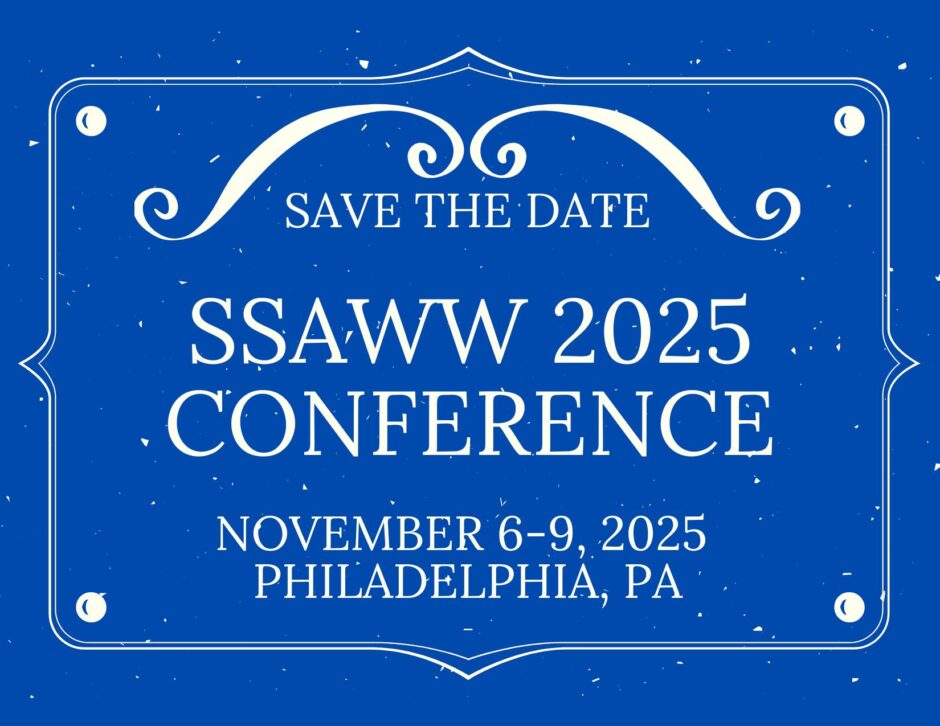
CFP for SSAWW: “A Conversation about Coalition Building: The Role of Women Author Societies in Times of Political Crisis”

Society for the Study of American Women Writers

2025 Conference | 6–9 November 2025 | Philadelphia, Pennsylvania

“A Conversation about Coalition Building: The Role of Women Author Societies in Times of Political Crisis,” organized by the Margaret Fuller Society

In 2025, in the spirit of Margaret Fuller’s nineteenth-century “conversations” and on the 25th anniversary of the founding of SSAWW, we seek to harness the power of community and of coalition building. We’re looking for speakers who have been or are currently leaders of women’s author societies—and for speakers who can voice perspectives about what emerging and/or marginalized scholars need from women author societies at this time. We want to host a roundtable conversation about what these author societies can do—and how we envision them shaping or re-shaping the field at a moment when educators—especially scholars and teachers whose work is amplifying the voices of women and people of color—are subject to budget cuts and to political censorship, elimination, investigation, and other violences.

Papers for this panel could engage the following questions, among others:

  • what roles should author societies have in times of political crisis?
  • in what ways should we work beyond “the author” in our organizations?
  • how can women author societies strengthen ourselves internally?
  • how can we collaborate and coalition-build with one another?
  • what roles do women author societies play in building community and sense of purpose and belonging in higher education?
  • why do some scholars of some women writers choose not to organize as author societies? why may that be a deliberate choice, not just a consequence of racist and/or sexist disciplinary histories?
  • what barriers to inclusion should we dismantle? 
  • how might we respond to changing conditions of the profession?
  • how can we best support students through undergraduate and/or graduate teaching and mentoring?
  • how can we best support emerging teacher-scholars as universities change?
  • how can we best support the non-academic communities we wish to serve through, for instance, public humanities projects or racial justice initiatives?

Submissions about the Margaret Fuller Society are, of course, welcome, but proposals need not be limited to Fuller. We deliberately seek engagement between and across author societies to think creatively and imaginatively together about the future of our work. The Fuller Society’s Committee for Racial Justice encourages panel submissions that address anti-racist approaches to scholarship, pedagogy, and community engagement. Scholars of color and early career scholars are—as always—especially invited to apply.

Please send proposals (250–300 words) or questions to Mollie Barnes at mbarnes2@uscb.edu with “SSAWW 2025 Proposal” in the subject line by February 21, 2025.