Margaret Fuller Society Birthday Fundraiser

HAPPY BIRTHDAY MARGARET!!

Let’s honor Margaret Fuller’s 216th birthday (May 23, 2026) by celebrating intellectual community, social reform, and the transcendent processes by which individuals grow into themselves. 

The Margaret Fuller Society encourages FB posts and listserv messages sharing your actions in these areas. AND we encourage you to donate $21.60, $43, $216, or any amount to the Margaret Fuller Society. Donations for the fundraiser will be used to fulfill the mission of the Society, including its new and expanding number of awards: the Phyllis Cole Award for Social Service and the Teaching to Racial Justice with Margaret Fuller Award, both of which you can read about here. We also will donate 25% from the fundraiser to the Margaret Fuller Neighborhood House, in recognition of their ongoing community service.

If you have questions about donations, please contact Lisa at lisa.west@drake.edu

We thank you for your support of the society’s work and for sharing the life, legacy, and contributions of Margaret Fuller with others.

Teaching to Racial Justice with Margaret Fuller

The Margaret Fuller Society announces a teaching award to support racial justice:

Teaching to Racial Justice with Margaret Fuller

The MFS Committee for Racial Justice welcomes entries that:

  • outline a syllabus including writing by Margaret Fuller and explain how Fuller’s work fits into the semester’s aims, including support of racial justice
  • describe a classroom activity or series of exercises that use Fuller’s writing to teach to issues of racial justice
  • detail a paper assignment that focuses on racial justice and engages Fuller’s writing
  • plan a community project that addresses racial justice and Fuller’s writing
  • propose a nontraditional pedagogical approach to racial justice issues through Fuller’s writing

Submissions should be limited to one page.

We especially encourage entries that engage critical race theory.  We welcome submissions from both members and non-members of the Society and urge graduate students to consider submitting.

The winning submission, as judged by the Society’s Committee for Racial Justice, will receive a small monetary award and be featured in Conversations, the publication of the Margaret Fuller Society.  The award will be presented at an online gathering in late summer.

Send submissions to katopodis [dot] christina [at] gmail [dot] com 

Deadline Extended: 31 July 2026

I Will Teach It For You

In collaboration with the Margaret Fuller Society, the Thoreau Society, Transcendental Concord, and a range of public thinkers and scholars, we invite you to adopt and share texts that are being censored or threatened. This mutual aid teaching exchange invites cultural workers in secure regions or positions to carry forward the intellectual passions of their colleagues who face political repression. We also aim to build a supportive community across regions and professions to support colleagues working under such restrictions.

How it works:

  • Someone will submit a text that they wish they could teach, share, purchase, or talk about but feel unable to do so due to political restrictions or pressure. You can submit a text at this link.
  • A second participant will “adopt” one of these texts that they are able to share, and will share it. As we collect responses, they will become visible at this link. You can sign up to adopt a text at this link.

What counts as teaching? Do I have to be a professor?

  • Many things count as teaching. You do not have to be a professor.
  • Examples of teaching a text might include giving the text as a gift, checking it out from a public library, posting about it online, recommending it to a friend, or adding it to your website.

Who can submit?

  • Anyone! Texts might be submitted by teachers, tour guides, librarians, public historians, or book club members. You can submit a text that you are unable to teach or a text that you know has been censored from the news or from colleagues.

Who can adopt?

  • Also anyone! We particularly invite adopters who have the institutional power, financial security, or regional protections to exercise free inquiry and weather criticism, including volunteer cultural workers, faculty emerit, tenured teachers or faculty, and folks in regions and institutions with robust free speech protections.

Why would I want to adopt a text?

  • This is a great chance to stretch your range of expertise, refresh your syllabus, or learn about new passions. It’s also good to have a concrete and manageable action you can take in the face of the stress created by threats to higher education.

Can I connect with the person who submitted/adopted this text?

  • Yes! We have set up a private avenue to help submitters and adopters connect if they both express interest in doing so.

Can I make my teaching public or available to the person who submitted and their community?

  • Great idea! You might consider sharing an op-ed, personal blog post, webinar, or informal conversation about your teaching experience or the text. We would love to help you brainstorm and organize this in collaboration with the submitter of your text!

What if I’m worried my institution/employer/government will be mad at me for submitting a text?

  • You always have the option to submit anonymously. If you want to attach your name but remain private, we will protect your name from public circulation, sharing it only with your permission. All submissions to this project go to an email managed by leadership of the Margaret Fuller Society.

Does this help the students or audiences who are being restricted from accessing this text or ideas?

  • Possibly. We don’t really know. By amplifying a text, we hope that it 1) will become or remain relevant to a discipline so that people who use the text in the future will be able to make a better case against its censorship and 2) will increase circulation of the text in non-academic spaces where audiences are more likely to encounter it, including in regions or institutions with political restrictions.

I have a critique, an idea about a better way to do this, or an idea about something you could do instead.

  • Fantastic! We want feedback and need help. Please reach out at authorsocietycollaboration [at] gmail [dot] com

We particularly want to acknowledge the work of the Just Teach One project by Duncan Faherty and Ed White, whose model of collaboration inspired this project.

MLA 2026 Recap

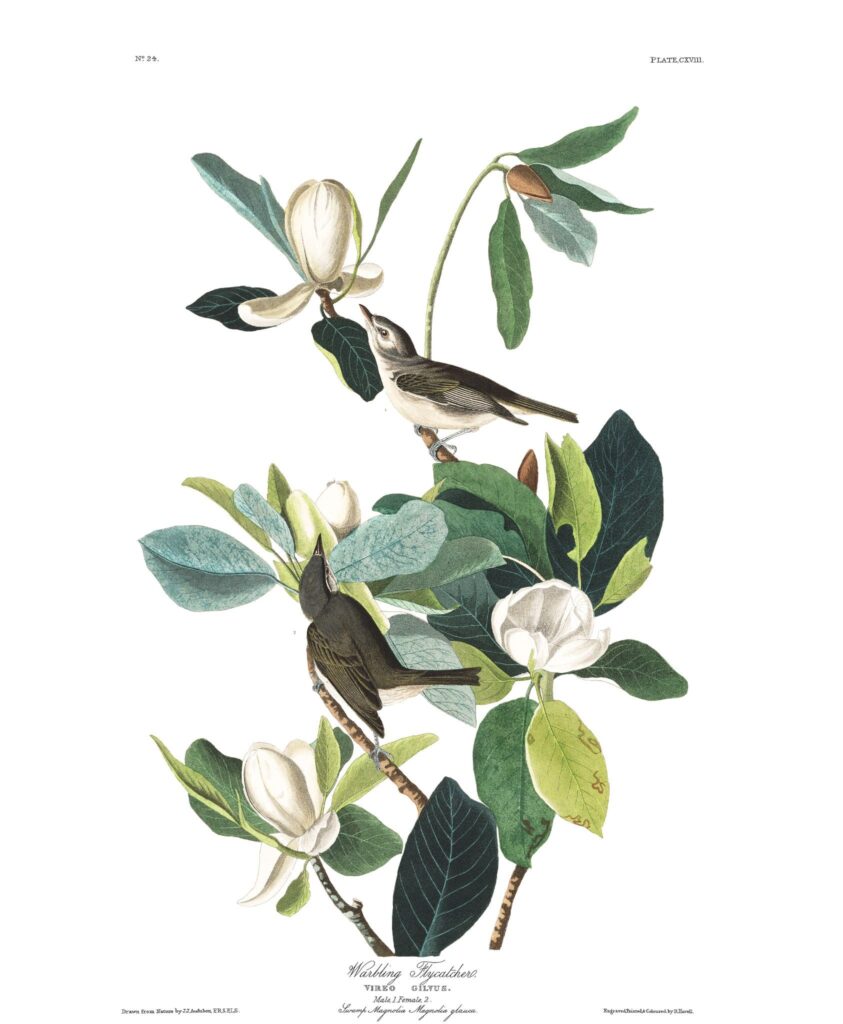
Members of the Fuller Society gathered in Toronto, Canada to give a variety of presentations. On the first day of the convention, Christina Katopodis (Second Vice President) presented on Thursday, January 8, “Unfurling Taxonomies: Margaret Fuller’s Responses to Science in ‘Magnolia of Lake Pontchartrain'” on a panel focused on the relationship between literature and taxonomy.

Illustration by John James Audubon (1785-1851) of two warbling flycatchers on a magnolia branch. The branch features several of the dramatic, large white blossoms and the green rubbery leaves of the magnolia grandiflora.

On Saturday, January 10, our Fuller Society sponsored panel, “Margaret Fuller and Nineteenth-Century American Women Writers Observing Nature, Engaging Science,” featured papers by Alice de Galzain (MFS Advisory Board), Thomas Howard, and Maxime Fecteau and was presided by Christina Katopodis.

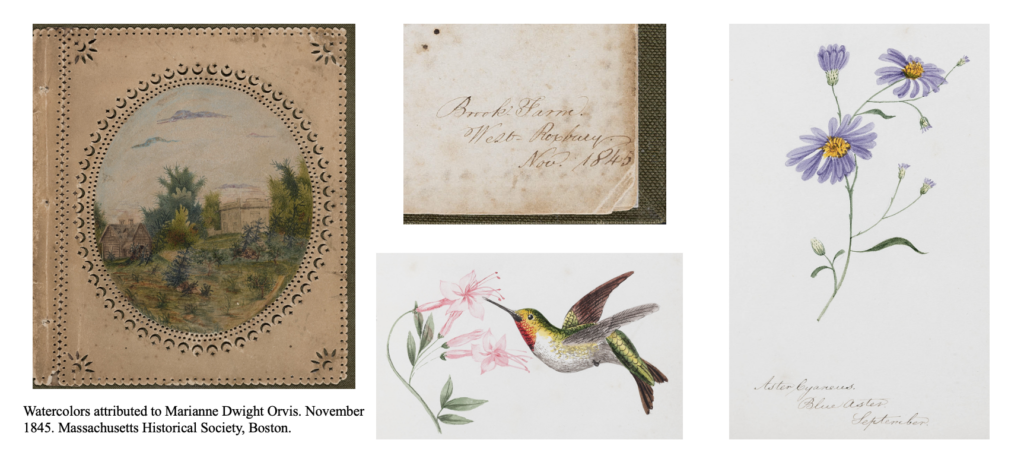
de Galzain spoke about “The Possibility of Mutual Flourishing” in the works of Margaret Fuller, Caroline Healey Dall, and Marianne Dwight Orvis, emphasizing female agency in Fuller’s short story, “Yuca Filamentosa” (1842), Dall’s Historical Pictures Retouched, and Dwight’s watercolors. de Galzain, through the lens afforded by Sarah Ahmed’s work on emotion, highlighted the important lesson of “wait and trust” in botany.

Several examples of watercolors including flowers, a garden, and a hummingbird, as well as a signature.

Howard’s paper focused on Emily Dickinson and the poetics of science, inviting us to “think botanically” with Dickinson, emphasizing plant agency. He traced Dickinson’s scientific thinking through her correspondence, and framed her scientific thinking in poetry as the art that “precedes science”–Charles Darwin writes that art precedes science because it is “experience & observation.”

Fecteau presented, “What Mystery Pervades a Well!”: Lynn Margulis in Conversation with Emily Dickinson” and delighted us with Margulis’s poetic thinking about microbiology and symbiosis. Margulis lived next door to Emily Dickinson’s Amherst homestead, claimed to “hear” Dickinson during her walks through Amherst, and wove the poet’s verses into her scientific presentations.

On Saturday January 10, Koritha Mitchell read aloud Eagan Dean’s remarkable presentation, “Against the Clinical Gaze on Life Writing: Louisa May Alcott and Self-Narrated Gender,” which was followed by great interest and robust discussion. Jay Grossman commented that it was a “provocative” and “convincing” paper.

MFS members and panelists convened for a Fuller Society lunch and dinner on Saturday when we were able to continue our conversations. It was such a joy for all of us to be together for a large part of the day, and it often felt as if our fellow members were there with us as we shared stories and admiration for our colleagues and friends.

On Sunday, January 11, MFA Member Ariel Silver presided on the panel, “Family Resemblances: Hawthorne’s Extended Bloodlines.”

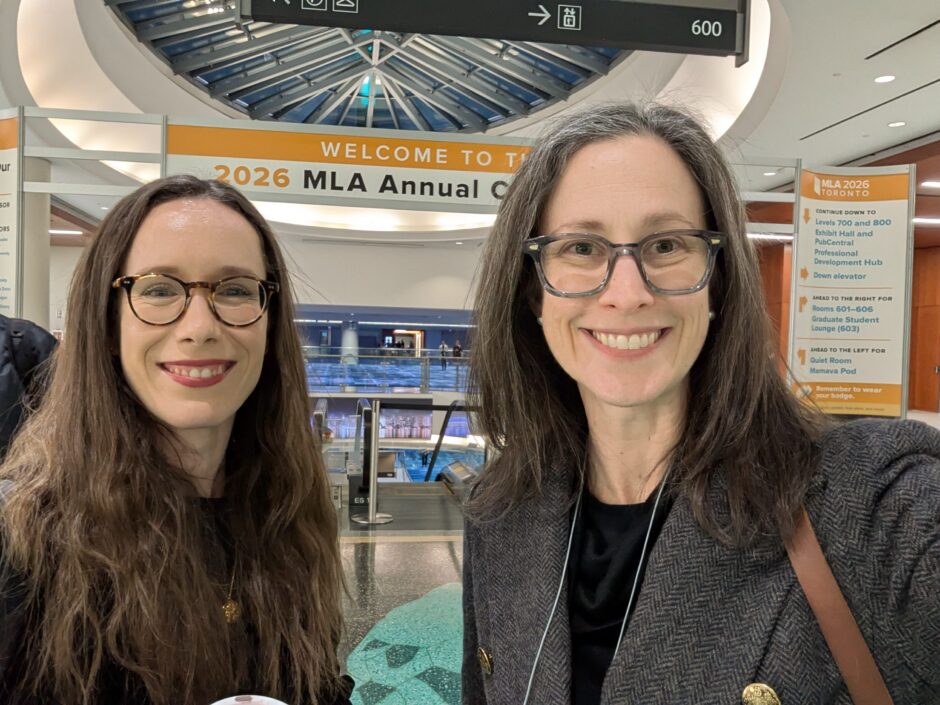
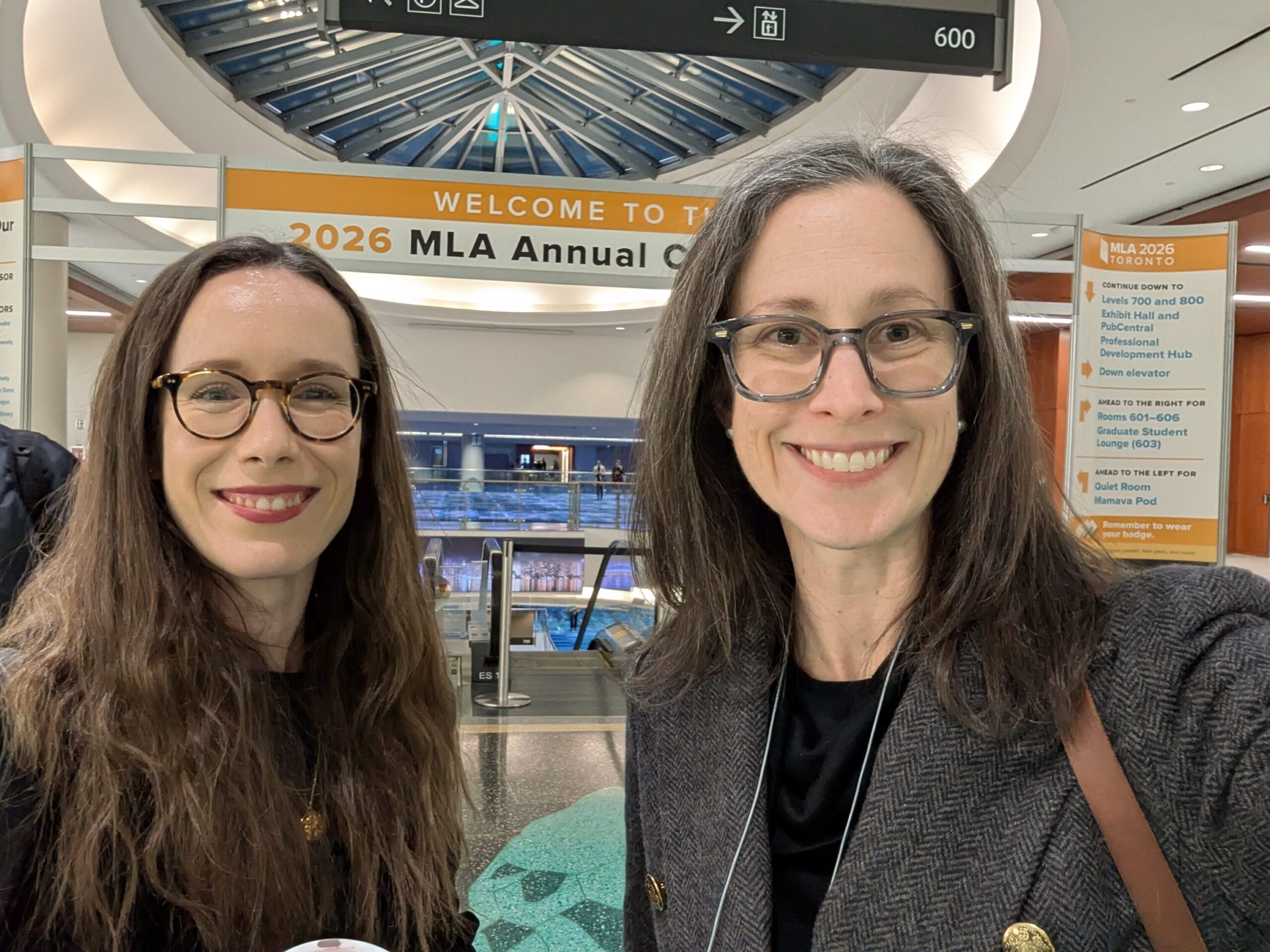
Two women stand smiling in front of the 2026 MLA Convention banner

3 Major Calls and Opportunities for Fullerenes and Friends

Call for Submissions to Conversations

Margaret Fuller Society’s Special Issue on “Protest”

The theme of the next issue of Conversations (Vol 6.2) is of the moment: Protest. We ask our contributors to reflect on what protest means both to you and to our nineteenth-century forebears whose thinking laid the groundwork for much of ours. We will publish long pieces and short, archival excerpts from the work we study, and reports on our and our communities’ protest efforts. You are welcome to publish anonymously (extravagant/fanciful pseudonyms welcome) if you so prefer, especially if your career might be in peril for speaking out. Please use your imagination, your creativity, and your hearts to help us move forward collectively into a world that is kind, just, and loving.

Please note: Although Conversations is not blindly peer-reviewed, our editorial team reviews all submissions and, in the case of acceptance, offers revisions as needed.

Deadline: February 28, 2026.

Email for submissions, proposals, and questions:

mfsconversations@gmail.com

Peruse previous issues of Conversations.


CFP for an MFS-Sponsored Panel at the 2026 Thoreau Society Annual Gathering

Trouble and Recovery:  Health in Margaret Fuller’s Life and Society

The Margaret Fuller Society is pleased to sponsor a panel for the upcoming Thoreau Society Annual Gathering in Concord, MA, July 8-12, 2026, complementing the overall conference theme, “Living Well: Thoreau, Health, and Flourishing.” Both health and the forces opposing it had powerful resonance in Fuller’s life and thought. As she wrote in the New York Tribune, “cancer on the body must in time affect the head and heart also.”*  The words of our title, “Trouble and Recovery,” encompass both obstacles to health and its restoration, in Fuller’s personal life or the family and society within which she lived, in body or “head and heart,” whether descriptive or metaphoric in significance. Proposals might, for example, focus on her struggle with headaches, early experiences of loss, record of dreams, nursing experience in Rome, pregnancy and childbirth, strategies of recovery and reform. So might they focus on any method of treatment she experienced, traditional or experimental, on the circumstances beyond recovery at the end of her life, on her analysis of societal ills and cures in the United States or Europe, or on her representation of health in Woman in the Nineteenth Century or other writing.

We also invite paper proposals that draw comparisons between Margaret Fuller and other women writers and movements, or other Transcendentalists. Contributions exploring the material dimensions of nineteenth-century women’s writing about health, as well as questions of archival recovery, are welcome. Early and independent scholars of Fuller are invited to propose their work as well as those more seasoned. Please submit a 300-word abstract and brief curriculum vitae to Phyllis Cole (pbc2@psu.edu) and Alice de Galzain (alice.degalzain@gmail.com) by December 31.

*Bean and Myerson, eds., Margaret Fuller, Critic, p. 103.


CALL FOR COLLABORATION

“We do not propose to remain silent.”

(founders of the Antioch Review, 1941)

Inspired by the AAC&U’s “Call for Constructive Engagement” and the Big 10’s developing “mutual defense compact,” and drawing from the commitment to justice and free inquiry among our subjects of research, the Margaret Fuller Society, Transcendental Concord, and the Thoreau Society are seeking collaborators in developing a public statement and potential solidarity compact. We seek collaboration in responding to dramatic recent assaults, originating in the US, on intellectual freedom, research funding, and the integrity and safety of learning environments.

We invite author societies and other organizations to join in conversation about our shared values as teachers, researchers, cultural workers, and thinkers in this extraordinarily challenging time for free inquiry. Through developing this statement, we hope to cultivate empathetic community and the capacity for a future mutual aid compact. 

We are seeking cross-organizational collaboration among a broad and diverse array of societies and groups, including members and leaders at all levels.

Questions we hope to discuss include:

  • · How might a statement reflect our shared values and communicate support for researchers, teachers, and cultural workers?
  • · What forms of mutual support can author societies and similar organizations offer to one another in terms of sharing information or pitching in labor?
  • · How would we want to respond if a society or society member’s research were targeted by funders, political officials, or academic officials because of that research’s political context or the researcher’s background? How would we want to respond to unjust employment actions against fellow teachers and cultural workers?
  • · How can we keep each other safe from harassment, especially in the classroom and online?
  • · What kind of community capacity can we build to weather the coming storm in and outside academia?

If this enterprise speaks to you, send your name, affiliated author society or similar organization, and contact information to authorsocietycollaboration@gmail.com. Please also help us spread the word by bringing our call to the attention of others you know who are active in author organizations. General body members of any organization are welcome to participate in conversation regardless of whether they represent their organization as a whole.

Our next steps will be to 1) invite everyone who has expressed initial interest to share core concerns they’d like to see considered in the drafting process; and 2) enlist a small committee to draft our statement.

Looking forward in solidarity,

The Executive Council of the Margaret Fuller Society

Transcendental Concord

The Thoreau Society

Critical Health: Feminist Perspectives on Health and Well-Being in the Nineteenth-Century United States

Alice de Galzain (Sorbonne Université) and Johanna Pitetti-Heil (Universität zu Köln) are delighted to share the details of their upcoming conference “Critical Health: Feminist Perspectives on Health and Well-Being in the Nineteenth-Century United States.” The event will be held on October 17-18, 2025, at Sorbonne Université in Paris, France. Alice and Johanna met when they both presented on the Margaret Fuller Society panel at the Thoreau Society Annual Gathering in July 2024, and they are thrilled to be collaborating on this new project:

“Critical Health” centers on women’s diverse experiences of health in the nineteenth-century United States. Focusing on the major changes in medicine and society during the nineteenth century, the conference aims to uncover the intricate connections between the personal, the political, and the medical realms. “Critical Health” brings together inquiries into medical practices, women’s experiences of health and well-being, and forms of physical and mental resistance to biomedical control. Inspired by Margaret Fuller’s engagement with questions pertaining to health and illness, the conference includes a number of papers on Fuller and transcendentalist writers, but it also branches out to transatlantic and interdisciplinary issues.  

Given the rise of health precarity that is currently ravaging the U.S., the importance of thinking critically about matters pertaining to women’s health in the nineteenth century is a particularly timely discussion, for which we aim to provide an engaging and provocative forum. By taking a multi- and interdisciplinary approach to health-care that covers literary studies, medical history, dance studies, and physical cultures, “Critical Health” puts into conversation a variety of research on the manifold ways in which health and well-being were approached in the nineteenth century. Investigating women’s health from these perspectives will yield a complex understanding of the relationship of individual suffering, structural neglect, and communal practices of care from an innovative interdisciplinary angle. 

We are very pleased to share a preliminary version of the conference program, which features a total of 22 speakers from France, Germany, the UK, the USA and Canada, including several Margaret Fuller Society board members. What’s more, we are truly honored to announce that Professor Emerita Phyllis Cole will be delivering the keynote address, tentatively titled “Self and Other: Caring for Health in the Journals and Letters of Transcendentalist Women.” The conference will be held as a hybrid event, which will allow Margaret Fuller Society members to attend the event remotely. 

A bientôt,

Alice & Johanna.

[Featured Image via Wikimedia]

An Updated Bibliography of Scholarship on Margaret Fuller by Alice de Galzain

This post was written by contributing author, Dr. Alice de Galzain.

Ten years ago, in a review of Megan Marshall’s Margaret Fuller: A New American Life (2013) and John Matteson’s The Lives of Margaret Fuller: A Biography (2012), Fritz Fleischmann asked the following question: “why is [Margaret Fuller] still so little known?” (275). While welcoming the publication of these two phenomenal biographies, he regretted that “[t]here is no Margaret Fuller Memorial, no museum, no national holiday, not even a postage stamp” (275). Strictly speaking, Fuller’s cenotaph at Mount Auburn Cemetery can be considered a memorial and there was also a memorial pavilion put up on Fire Island in the early twentieth century that lasted about a decade, until a storm swept it away.[1] However, the kind of reverence that has always characterized the public reception of Ralph Waldo Emerson’s and Henry David Thoreau’s works—which is what I think Fleischmann is alluding to—has not been there for Fuller, whose name was rescued from oblivion by an amazing group of scholars in the 1970s and 80s.

In 2024, things are looking quite different. The recent updates to the Margaret Fuller Society online bibliography [now publicly available to view and download below and on our resources page] reflect the dynamic state Fuller studies are in today, showing that a tremendously vast amount of scholarly work has been produced on Fuller in recent years. It is a really exciting time for Fuller studies! In 2025, a Library of America edition of Fuller’s writings, edited by Noelle A. Baker, Megan Marshall, and Brigitte Bailey, will be published, and, in the years to follow, the Edinburgh Edition of the Collected Writings of Margaret Fuller, edited by Leslie E. Eckel, Sonia Di Loreto, and Andrew Taylor, will also come out. Symbolically very important, these two editions mark a crucial milestone in terms of the accessibility of Fuller’s writings.

In “A Short Essay on Critics,” Fuller defined the role of the “critic” as follows:

we feel the need of a criterion, of a standard; and then we say what the work is not, as well as what it is . . . . We do not seek to degrade but to classify an object by stating what it is not. We detach the part from the whole, lest it stand between us and the whole. When we have ascertained in what degree it manifests the whole, we may safely restore it to its place, and love or admire it there ever after. (8)

The body of critical work listed in the Fuller Society online bibliography—journal articles, monographs, edited collections, and dissertations—sheds light on the glories and limitations of Fuller’s work—on “what it is” and “what it is not.” It shows that, now more than ever, new perspectives are entering Fuller studies—queer, ecofeminist, decolonial, and pedagogical perspectives. The bibliography, which features works in English and other languages (a beautiful reflection of Fuller’s cosmopolitanism) and which we will continue to update, seeks to help graduate students, scholars, and members of the general public alike easily navigate and understand the current—and past—state of Fuller studies.

Works Cited

Fleischmann, Fritz. “Reading Margaret Fuller.” Resources for American Literary Study, vol. 37, 2014, pp. 275-88.

Fuller, Margaret. “A Short Essay on Critics.” Dial, vol. 1, no. 1, 1840, pp. 5-11.


[1]  I owe these two remarks to Megan Marshall, who kindly reminded me of Fuller’s two memorials in an e-mail.

MFS at the 2024 Thoreau Society Annual Gathering

The Margaret Fuller Society sponsored a panel on “Margaret Fuller, Women in the 19C, and Resilience” at the Thoreau Society Gathering held in Concord, MA on Thursday, July 11, 2024. Read the full CFP here (opens in new tab). The panel, co-organized by MFS Past President Phyllis Cole and MFS Second Vice President Christina Katopodis, was very well-attended and followed by a robust, engaging discussion with the audience. The papers were as follows:

“The Body Resilient: Margaret Fuller’s Materialist Transcendentalism” by Johanna Pitetti-Heil

Johanna Pitetti-Heil is an American studies scholar with a specific research interest in literary studies and cultural theory, critical dance dance studies, feminist philosophy, and, most recently, transcendentalism. She is a (tenured) senior lecturer for gender and diversity studies at the English Department of the University of Cologne, Germany. She is co-editor of gender forum and she is a board member of SLSAeu. She is the author of Walking the Möbius Strip: An Inquiry into Knowing in Richard Powers Fiction (Winter, 2016), and her work in American literary and cultural studies, including critical dance studies, has appeared in journals such as Dance Chronicle, Hypatia, Amerikastudien / American Studies, WiN, the forum of J19, and in edited collections. She passed the Habilitation review process in 2024 and is currently preparing her second book manuscript “Becoming-Body: Practices of Freedom and Technologies of the Self in American Modern Dance.”

Johanna spoke about the linkage between materially real bodies (and body pains) and Fuller’s philosophy, reminding us that Fuller did not always put the soul over matter. She theorizes Fuller’s materialist transcendentalism, drawing from new materialism.

“Women Transcendentalists in the Publishing World: Margaret Fuller and Caroline Healey Dall’s Stories of Resilience” by Alice de Galzain

Alice de Galzain completed her PhD in English at the University of Edinburgh, where her dissertation focused on Ralph Waldo Emerson’s portrayal of Margaret Fuller in Memoirs of Margaret Fuller Ossoli (1852). She is about to begin a postdoc at Sorbonne University, working on “Women Networks and Transcendentalist Utopias: Health, Gender, and Reform.” Alice is the Associate Editor of The Concord Saunterer: A Journal of Thoreau Studies and the Associate Editor of Margaret Fuller, Periodical and Other Writings, 1834-1844, The Edinburgh Edition of the Collected Writings of Margaret Fuller. Her article on “Transcendentalist Women in Conversation: Margaret Fuller, Sophia Ripley, and ‘Woman’” appeared in Transatlantica: American Studies Journal in 2022, and she has two essays due to appear in Legacy and LIT: Literature Interpretation Theory later this year.

Alice spoke about how women’s overwork gets written into their sentences, notes their shortness, the integration of life and work writing in the same spaces. She spoke about the precarity and burdens of editorship, that Fuller and Dall were lied to, undercompensated, and, yet, remained committed to the written word.

“Resilience in Fuller’s Friendships with Arconati and Belgiojoso” by Patricia Richards

Patricia Lyn Richards earned her PhD in Italian literature from Rutgers University and has taught for several decades at Kenyon College in Ohio. Though her field was the Renaissance, she later moved into film, and recently discovered the intriguing complexity of the nineteenth century, while researching a paper on both the men and women Fuller was closest to in Italy.

Patricia spoke about friendship (in concept and in practice), focusing on Fuller’s friendships with two women in Italy. She detailed how these two women contemporaries offered Fuller examples of supportive friendships: they offered her solace, information, and the opportunity for action, giving reality to her philosophy of gender.

Tamara Rose (Left) with MFS Past President Phyllis Cole (Right), wearing the Thoreau Society Medal, at an MFS-sponsored dinner on July 11, 2024. Photo courtesy of Tamara Rose.

The panel was followed by a ceremony honoring MFS Past President Phyllis Cole, who was awarded the Thoreau Society Medal, the society’s highest honor, as well as a dinner at Fiorella’s Cucina organized by MFS Second Vice President Christina Katopodis.

Read the award statement here (opens in new tab).

“Refusing Foreclosures and Endings: 19C Women Writers’ Defiance, Persistence, and Resilience” MFS-organized Roundtable at C19 in Pasadena, CA

On March 14, 2024, we gather in Pasadena at the 2024 C19 Eighth Biennial Conference for a roundtable organized by the Margaret Fuller Society on “Refusing Foreclosures and Endings: 19C Women Writers’ Defiance, Persistence, and Resilience.” We have an impressive lineup of papers. Below you will find their titles, authors, and author bios.

“Margaret Fuller and the Ends of Immigrant Inclusion” by Leslie Eckel (Suffolk University)

“Feminist Kill(ed) Joys: Woman’s Health and Feminist Resistance in The Una (1853-55)” by Alice De Galzain (University of Sussex)

“Going Beyond: Cross-cultural Literary Adventure of Rebecca Rush and Lydia H. Sigourney” by Rowshan Chowdhury (University of Massachusetts, Amherst)

“Mirrored in Miranda: Margaret Fuller’s Intertextual Dialogues with Paternal Legacies and Male Discourses in ‘The Great Lawsuit'” by Manzar Feiz (University of Texas, Dallas)

“‘Still-Born Aspirations:’ Mothers of Stone in Elizabeth Stuart Phelps’s The Story of Avis” by Maddie Olley (Syracuse University)

“Defiant Friendship: Female Intersubjectivity in the 19th Century Asylum” by Elisabeth Harris (University of North Carolina, Chapel Hill)

Author Bios

Join us at MLA 2024 for a Social Justice Pedagogy Panel on “Mutual Transformation”

The Margaret Fuller Society is sponsoring a panel on “Mutual Transformation: The Social Justice Classroom in the Nineteenth Century and Today,” organized by the MFS Racial Justice Committee. The presider for the panel will be Dr. Christina Katopodis (City University of New York), co-author with Cathy N. Davidson of The New College Classroom (Harvard UP, 2022). We have an exciting lineup of panel presentations:

“From Self-Reliance to Self-Care: Transcendentalism and Social Justice in the Classroom,” Jess Libow (Haverford C) 

“Breath-taking Pedagogy and the Practice of Hope: Course Design and Teaching a BLM Literature Course,” Shermaine Jones (Virginia Commonwealth U)

“Fuller-Inspired Conversations on School Curriculum Battles and Wheatley-Linked Public Humanities,” Sarah Ruffing Robbins (TCU)

“A Mind Afire: Marie Duclos Fretageot and a Forgotten Frontier of American Progressive Education,” Diane Baia Hale (Independent Scholar) 


Featured image via Hidden City