CFP for C19: The Society of Nineteenth-Century Americanists

2026 Conference | 12–14 March 2026 | Cincinnati, Ohio

“To Give Them All A Welcome To Our Shores”: Immigrant Voices and Advocates in Nineteenth-Century Periodicals

Organized by the Margaret Fuller Society

On 28 June 1845, Margaret Fuller published a piece in the New-York Daily Tribune calling on readers to celebrate “The Irish Character.” In her opening paragraph, Fuller positions her article as a response to a piece published the week before titled “Spirit of the Irish Press.” Fuller’s eight-paragraph editorial is complicated and, at moments, difficult to read. The final, breathless paragraph opens with one of her characteristic rallying cries:

When we consider all the fire which glows so untameably in Irish veins, the character of her people, considering the circumstances—almost miraculous in its goodness—we cannot forbear, notwithstanding all the temporary ills they aid in here, to give them all a welcome to our shores. Those ills we need not enumerate; they are known to all, and we rank among them what others would not, that by their ready service to do all the hard work they make it easier for the rest of the population to grow effeminate and help the country to grow too fast. But that is her destiny, to grow too fast; it is useless talking against it.

On one hand, Fuller urges us not to name “ills” often associated with particular groups of immigrants (in this case, Irish-Americans). In the rest of the article, she urges us to counter stereotypes and slurs with empathy, with humanity, and with hope for the future of the nation. On the other hand, her article puts words to these stereotypes and slurs in key passages elsewhere. It also romanticizes Irish and Irish-American people, opening with a trio of anecdotes about immigrant families’ sacrifices whose “old romantic associations” feel more like “poetry” to Fuller than the life stories of flesh-and-blood bodies.

One hundred and eighty years later, we too turn to journalists’ outcries to bolster our collective moral compass as a nation—against rising anti-immigrant racism; against dehumanizing expulsions and repressions of refugees, immigrants, and citizens; and even, as of June 2025, against violent judicial erasures of the most fundamental ideas in the Fourteenth Amendment (ratified twenty-three years after Fuller’s piece).

What can we learn from Fuller’s journalism about immigrants? How does it compare to other voices or advocates of her moment? How do her slurs, stereotypes, and/or silences haunt?

Papers for this panel could engage the following topics, among others:

●      studies of immigrant newspapers or other periodicals

●      recoveries of immigrant writers, whether canonical, non-canonical, or unnamed

●      analyses of print culture communities bound together through immigrant periodicals

●      representations of journalism in immigrant literature

●      discussions of immigrant advocates and/or their limitations

●      approaches to teaching immigrant voices and advocates in undergraduate courses

Submissions about Margaret Fuller are, of course, welcome, but proposals need not be limited to Fuller. We deliberately seek engagement between and across author societies to think creatively and imaginatively together about the future of our work. The Fuller Society’s Committee for Racial Justice encourages submissions that address anti-racist approaches to scholarship, pedagogy, and community engagement. Scholars of color and early-career scholars are—as always—especially invited to apply.

Please send proposals (250–300 words) or questions to Mollie Barnes at mbarnes2@uscb.edu with “C19 2026” in the subject line by 10 August 2025.
“Margaret Fuller and 19C American Women Writers Observing Nature, Engaging Science”

Margaret Fuller’s “Entertainments of the Past Winter,” published in the July 1842 issue of the Dial, relays, “Wherever we went, there was Lyell’s Geology on the table, and many of the suggestions made by these lectures lingered in conversation throughout the winter.” She is referencing Charles Lyell’s Principles of Geology, which made the then relatively new concept of deep time palatable to a wide audience. Lyell aided Fuller’s understanding of how past and present are connected, and helped her to see the long and ongoing processes of nature. 

We often consider Fuller an early feminist, journal editor, educator, translator, music critic, and pioneering war correspondent, but we rarely frame her as a woman writer reading and responding to emerging sciences. Yet we know she was among many American women writers studying and responding to natural science. Susan Fenimore Cooper, Emily Dickinson, Fanny Fern, Almira Phelps, Lydia Huntley Sigourney, and Mary Treat are but a few examples.  

The Margaret Fuller Society invites papers that engage American women writers and science, including but not limited to these topics: 

  • Texts by practicing or aspiring women scientists and science teachers
  • Responses to new information in emerging natural sciences or medicine
  • Women’s relationship to nature, health, and medicine
  • Pediatrics and women observing children’s health and wellness
  • Growing awareness of climate and human impact
  • Early environmentalism and conservation efforts
  • Gardening, foraging, and agriculture
  • Outdoor fiction and nonfiction
  • Indigenous and multicultural knowledge(s)
  • Social ecologies, healthful communities and collaborations
  • Correspondence and building scientific circles and thinking

While we welcome and encourage submissions that engage Margaret Fuller’s work, submissions need not be limited to work on Fuller herself. Early career scholars and graduate students are especially welcome to submit. Please send a title and 300-word abstract to Dr. Christina Katopodis (katopodis.christina@gmail.com) by March 20, 2025.

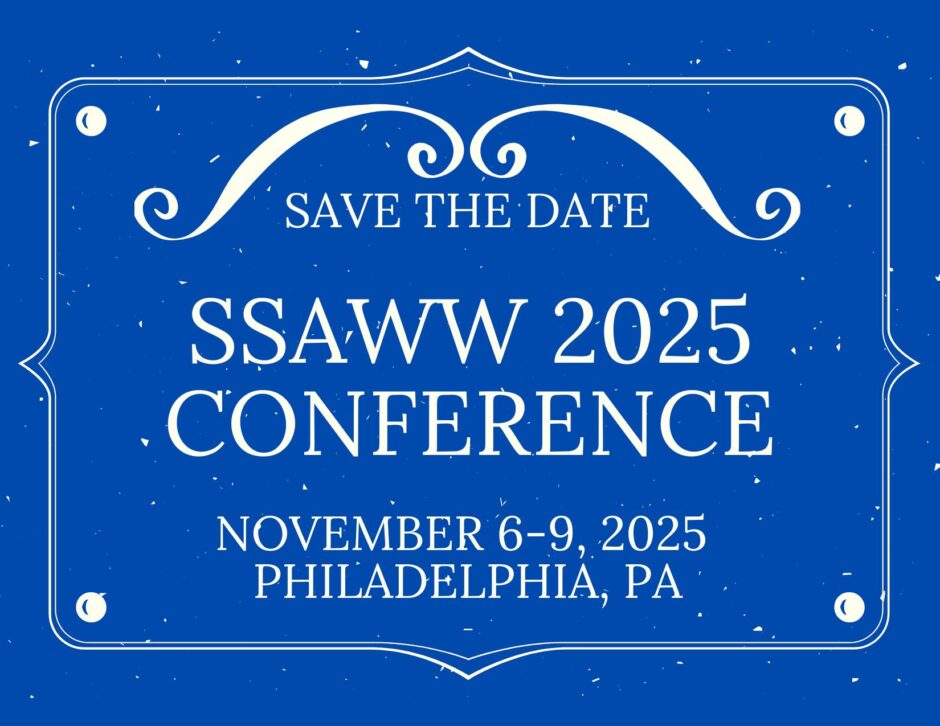
CFP for SSAWW: “A Conversation about Coalition Building: The Role of Women Author Societies in Times of Political Crisis”

Society for the Study of American Women Writers

2025 Conference | 6–9 November 2025 | Philadelphia, Pennsylvania

“A Conversation about Coalition Building: The Role of Women Author Societies in Times of Political Crisis,” organized by the Margaret Fuller Society

In 2025, in the spirit of Margaret Fuller’s nineteenth-century “conversations” and on the 25th anniversary of the founding of SSAWW, we seek to harness the power of community and of coalition building. We’re looking for speakers who have been or are currently leaders of women’s author societies—and for speakers who can voice perspectives about what emerging and/or marginalized scholars need from women author societies at this time. We want to host a roundtable conversation about what these author societies can do—and how we envision them shaping or re-shaping the field at a moment when educators—especially scholars and teachers whose work is amplifying the voices of women and people of color—are subject to budget cuts and to political censorship, elimination, investigation, and other violences.

Papers for this panel could engage the following questions, among others:

  • what roles should author societies have in times of political crisis?
  • in what ways should we work beyond “the author” in our organizations?
  • how can women author societies strengthen ourselves internally?
  • how can we collaborate and coalition-build with one another?
  • what roles do women author societies play in building community and sense of purpose and belonging in higher education?
  • why do some scholars of some women writers choose not to organize as author societies? why may that be a deliberate choice, not just a consequence of racist and/or sexist disciplinary histories?
  • what barriers to inclusion should we dismantle? 
  • how might we respond to changing conditions of the profession?
  • how can we best support students through undergraduate and/or graduate teaching and mentoring?
  • how can we best support emerging teacher-scholars as universities change?
  • how can we best support the non-academic communities we wish to serve through, for instance, public humanities projects or racial justice initiatives?

Submissions about the Margaret Fuller Society are, of course, welcome, but proposals need not be limited to Fuller. We deliberately seek engagement between and across author societies to think creatively and imaginatively together about the future of our work. The Fuller Society’s Committee for Racial Justice encourages panel submissions that address anti-racist approaches to scholarship, pedagogy, and community engagement. Scholars of color and early career scholars are—as always—especially invited to apply.

Please send proposals (250–300 words) or questions to Mollie Barnes at mbarnes2@uscb.edu with “SSAWW 2025 Proposal” in the subject line by February 21, 2025.

Deadline Extended! CFP: “Margaret Fuller, Women of the Nineteenth Century, and Revolution”  

The Margaret Fuller Society is pleased to sponsor a panel at the upcoming Thoreau Society Annual Gathering in Concord, MA, July 9-13, 2025. The overall theme of the conference, in honor of the 350th anniversary of the battle of Lexington and Concord, is “Revolution,” an especially apt context for exploring Fuller’s life and work. Papers might focus on her rhetoric of the American and French revolutions in Woman in the Nineteenth Century, her choice of heroines from history relevant to revolutionary progress, or her address to national questions of race and slavery alongside gender.  Her dispatches for the New York Tribune might be explored as they actually take readers to the scene of revolution and its defeat in Rome, and as she interprets the new order and the “next revolution” for both Europe and America, while her personal correspondence hints at the personal or sexual revolution in her own life. 

We also invite paper proposals that draw comparisons between Margaret Fuller and other women writers and movements, or other Transcendentalists. Early and independent scholars of Fuller are welcome to propose their work as well as those more seasoned. Please submit a 300-word abstract and brief curriculum vitae to Christina Katopodis (katopodis [dot] christina [at] gmail [dot] com) with subject line “MFS 2025 AG Proposal” by December 31.

Note: Dec 31 is the extended deadline. The original deadline was Dec 15.

2025 MLA CFP: “Imperfect Women Writers” sponsored by the Margaret Fuller Society

“Imperfect Women Writers” sponsored by the Margaret Fuller Society

Modern Language Association 2025 | January 9–12, 2025, New Orleans

In Memoirs of Margaret Fuller Ossoli, the editors cite an anonymous correspondent of Fuller’s, who writes, “Margaret was one of the few persons who looked upon life as an art, and every person not merely as an artist, but as a work of art. She looked upon herself as a living statue, which should always stand on a polished pedestal, with right accessories, and under the most fitting lights. She would have been glad to have everybody so live and act. She was annoyed when they did not, and when they did not regard her from the point of view which alone did justice to her. No one could be more lenient in her judgments of those whom she saw to be living in this light. Their faults were to be held as ‘the disproportions of the ungrown giant.’ But the faults of persons who were unjustified by this ideal, were odious.”

Plenty of Fuller’s best and most sensitive readers would disagree with this appraisal. Still, it is useful for thinking about the ways readers and critics continue to render women writers works of art upon pedestals. How do we chip away at that penchant? What responsibilities do we have as critics to remove women writers from the pedestals predecessors or previous readers may have made?

How should we write and teach women writers in ways that document their flaws, failures, shadows, perceived imperfections, or positions on “wrong” sides of history?

How d0 women writers—and their readers—contend with criticism or with pressures not to speak up and out during their time?

How do censorship and/or recovery scholarship affect the ways we study women’s writing in our own difficult moment, especially amidst increasingly racist and misogynist currents within/against academia?

How should critics handle violence in nineteenth-century women’s views/voices and writing?

Submissions about Margaret Fuller are, of course, welcome, but proposals need not be limited to Fuller’s life or work. The Margaret Fuller Committee for Racial Justice encourages submissions to all panels to address anti-racist approaches to scholarship, pedagogy, and community engagement. Early career scholars are—as always—especially encouraged to apply.

Please send 250-word proposals or questions to Mollie Barnes at mbarnes2@uscb.edu with “MLA 2025 Proposal” in the subject line by March 22, 2024.

CFP for the 2024 American Literature Association (ALA) Conference

Margaret Fuller Society

American Literature Association 2024 Conference CFPs

Deadline Extended: January 22, 2024

Contact: argerj@gmail.com

The Margaret Fuller Society will sponsor two panels on relationality at the 35th Annual Conference of the American Literature Association, to be held 23–26 May 2024 at The Palmer House Hilton in Chicago. Please help circulate our CFPs far and wide across your circles of shared interest.

Send 250-word proposals (indicating AV needs) that respond to the calls below, along with brief biographical statements, to Jana Argersinger, 1st Vice President, at argerj@gmail.com. Submissions from graduate students and folks in non-academic fields are very welcome.

For conference details, go to http://americanliteratureassociation.org/ala- conferences/ala-annual-conference/. To learn more about the Fuller Society, visit https://margaretfullersociety.org/.

******************************************************************************

“Matters of belonging,” to quote two theorists of affect—matters of integration and dis-integration, to echo the founder of interpersonal neurobiology—run through all branches of relationship science, a discipline with “growing coherence and influence . . . on myriad scholarly fields” in both soft and hard sciences (Annual Review of Psychology, 2017). Belonging, being in secure relation, it seems increasingly clear, is at the core of human nature. And as the 2017 report points out, “poets, novelists, and philosophers have long recognized the centrality of relationships to human existence” (383), while scientists lag behind. According to Robin Wall Kimmerer, who dances gracefully across these disciplinary boundaries, “All of our flourishing is mutual” (Braiding Sweetgrass).

Both of our ALA panels will explore this topic in relation to Margaret Fuller and other women of the nineteenth century—the second panel focusing on pedagogy.

1) “Matters of Belonging” I: Relationality and Feeling in Fuller and Other 19C Women Writers and Reformers

Margaret Fuller, the much-acclaimed intellectual and supposed loner, lived and wrote throughout her years in the ambit of relationality and feeling. Her Autobiographical Romance constricts with complex grief in remembrance of her lost father and thrums with the travails of young friendship, the sting of alienation, the joys of attunement. Letters agonize over what she feels as her friend Emerson’s coldness and proclaim, “All the souls I ever loved are holy to me.” Beethoven’s Fifth Symphony speaks to her of the “tearful sweetness of the human heart.” The record of her Conversation series for women sets collaborative learning at its foundation. As a foreign correspondent and active witness to Italy’s Risorgimento, she sees “deeds of brotherhood” and a “spirit” that “cheers and animates” her own—in transatlantic relation to a “spoiled” US that may reawaken to its founding vision. And she writes, at length, with protective tenderness of her partner Giovanni Ossoli and their small son just months before drowning with them in shipwreck off Fire Island.

The Fuller Society invites ideas about these and other movements of relationality and feeling in the work of Fuller and other 19C women both within and beyond her cohort. Among an abundance of possibilities, papers could address the following:

  • Reciprocity, competition
  • Rupture, reconciliation
  • Family bonds, romantic partnership
  • Collaboration toward social justice
  • Indigenous experience
  • Lived experience of race, gender, economic condition
  • Applications of relationship science (attachment theory, interpersonal neurobiology, interdependence theory, affect theory, affection exchange theory)
  • Interpersonality in the process and products of writing
  • Collective experience of art, music, literature
  • Community storytelling
  • Autobiography in relation
  • Aesthetics/matters of form
  • Relationship with other-than-human beings
  • Health/well-being
  • Surprising/non-traditional kinships and alliances
  • Intellectual relation
  • Hierarchies, lateral relation
  • Varieties of feeling in relation:
    • feeling in common with others as fomenting collaboration/revolution
    • feeling the body-in-transcendence
    • feeling as fact/knowledge
    • affect (feeling before cognition)
    • feeling as in physical sensation
    • feeling and spirituality

2) “Matters of Belonging” II: Learning and Teaching in Relation—Fuller’s Conversations and Beyond

What do Fuller (in her Conversations, journalism, varied reform projects) and other women educators of her era suggest to us about modes of relationality and feeling in our efforts to teach and learn together, both inside and outside the classroom?

Potential points of contact:

  • Feeling as medium and/or content of learning
  • Building community in the learning environment
  • Learning collectively, challenging hierarchies
  • Conversation as an often-neglected learning outcome—and as urgent civic education
  • Perspective of grad student teachers
  • Public humanities
  • Social justice pedagogy
  • Restorative justice practices, including circle work
  • Community engagement and service learning
  • Learning venues outside the traditional classroom (for example: prisons, websites, museums, nature centers)
  • Marginalized populations reclaiming their stories
  • Mentoring
  • Autobiographical elements
  • Role of technology
  • Fertile challenges and problems

CFP: Margaret Fuller, Women in the 19C, and Resilience

Panel for the Thoreau Gathering in Concord, MA, July 10-14, 2024

Margaret Fuller both overcame odds and recognized the virtue of resilience in others. “Resilience” is the theme of this year’s Thoreau Gathering, and the organizers suggest four categories for considering this strength: ecological, cultural/political, personal/spiritual, and legacy. With some major differences from Thoreau, these same categories are helpful with Fuller, and in our annual contribution to the Gathering we invite presentations approaching her and likeminded women writers in her circles that also draw on one of these kinds of resilience.

–Ecological: any particular encounter by Fuller with nature in the U.S. or Europe, expressed in prose or poetry; interpretation of the American West as a scene of new energy for settlers and/or possible defeat for Native Americans in Summer on the Lakes.

–Cultural/political: Fuller’s self-education in response to gendered limits placed on institutional schooling; leadership of Conversations as a result of this learning or lesson to women in attendance; any particular mythic or historic example of resilience in Conversations or Woman in the Nineteenth Century; encounters with new social realities in New York City or Europe; possibilities of victory beyond defeat in the Italian Revolution.

–Personal/spiritual: reflections on her experience of mourning and its overcoming; the burdens of a daughter in her family; illness and health; love lost and gained; the search for vocation in a gender-constricted world; religious doubts and epiphanies; personal belief as expressed in published or personal writing.

–Legacy: Fuller’s presence and power of inspiration in the nineteenth-century women’s rights movement or the circles around her; recovery in the 1960s and since as a voice within contemporary feminism or the canon of Transcendentalism. Examples of the costs of resilience or survival might also be considered. Comparison of Fuller with another writer in her circle, or personal statements of her value for one’s own resilience, are also welcome. Early career scholars and graduate students are especially encouraged to apply, and inquiries are encouraged by any applicant.

Proposals are due by December 8, 2023—please send to Phyllis Cole (pbc2 [at] psu [ dot] edu) and Christina Katopodis (katopodis [dot] christina [at] gmail [dot] com).

CFP for C19: “Refusing Foreclosures and Endings: 19C Women Writers’ Defiance, Persistence, and Resilience” (Pasadena, CA)

The Margaret Fuller Society seeks to form a panel for the March 2024 C19 conference in Pasadena, CA: “Refusing Foreclosures and Endings: 19C Women Writers’ Defiance, Persistence, and Resilience.”

We invite abstracts of no more than 250 words that engage with Fuller and/or other 19C women writers (American and otherwise) as well as the conference theme—”The End.” Papers might consider the following topics, among numerous possibilities:

  • untimely ends 
  • refusing endings
  • playing with traditional narrative or poetic endings
  • various means to—or around—an end
  • reform efforts as well as their imperfections and limits
  • failed revolutions
  • critiques of “resilience,” as theorized and applied
  • finishing schools or crossing finish lines
  • finishing as orgasm
  • abortion, broadly conceived
  • ways around, through, or under seemingly insuperable barriers—including structural racism
  • ways in which this new generation of students and faculty are challenging us to change the ends or goals of American literature syllabi

Early career scholars are especially encouraged to apply. Please send proposals and questions via this form by August 26.

Call for Papers for MLA 2024: A Social Justice Pedagogy Panel

Deadline for Submissions: March 1, 2023

Contact: argerj@gmail.com 

The Margaret Fuller Society will sponsor a panel at the 2024 Modern Language Association Convention in Philadelphia, to be held 4-7 January 2024. Please send 250-word proposals (indicating AV needs), along with brief biographical statements, to Jana Argersinger, First Vice President, at argerj@gmail.com. Submissions from graduate students are most welcome.

For conference details, click here (opens in new window).


Mutual Transformation: The Social Justice Classroom in the Nineteenth Century and Today

The Fuller Society’s Committee for Racial Justice invites paper proposals on social justice pedagogies past and present—from approaches developed in early schoolhouses to the strategies of teacher-scholars in today’s classrooms. The panel especially invites proposals that connect theory and practices of antiracist pedagogy so named to earlier theories and practices that have been labeled progressive, feminist, queer, social justice, or active learning. It is important to remember these progressive pedagogies as we work to transform American literary studies and make the university more equitable and just in support of social change. 

Rather than dictating or lecturing in her 1839–1844 Boston Conversations, Margaret Fuller led open dialogues among women meant to empower them to think for themselves, practicing an early form of social justice pedagogy. Her purpose was to discover “what we [she and her pupils] may mutually mean.” Today, her forward-thinking feminist methods resonate with the progressive pedagogies of June Jordan and Felicia Rose Chavez, among others. Her model of “mutual meaning,” or co-learning, whereby participants arrive at conclusions through an open-ended process of self-discovery, anticipates Maria Montessori and John Dewey. But it is often forgotten that Fuller’s Conversations were themselves anticipated by conversational pedagogies in such associations for mutual “improvement” as the African-American Female Intelligence Society of Boston and the Female Literary Association of Philadelphia, where Sarah Douglass recommended that the group reading, conversation, and writing “be altogether directed to the subject of slavery.”

Much of today’s higher education descends from the nineteenth century—not from progressive educators but from the industrial revolution and eugenicists who made the modern university a training ground for factory workers through the passive “banking model” of education (in Paulo Freire’s terms). Cathy N. Davidson and Christina Katopodis, in their recent book The New College Classroom (Harvard UP, 2022), argue for the crucial role that active learning plays in structuring equity into our classrooms, going beyond inclusion to antiracist praxis. This panel takes up the book’s invitation to change by uplifting progressive pedagogues and calling for presentations that seek to transform us.

Possible topics:

  • Literary representations of learning
  • Literary products of progressive or radical pedagogy
  • Early historical examples of social justice pedagogies (e.g., African American literary associations, Boston Conversations, Hull House)
  • Antiracist teaching, including course and/or assignment design inspired by Fuller (or her limitations) or by contemporary writing that helps us to be in dialogue with her
  • Women’s education and issues of race
  • Black Panther Party Liberation Schools
  • Talks to teachers (e.g., William James, James Baldwin)
  • Teaching diaries (e.g., Audre Lorde’s)
  • Progressive pedagogical theories (from Elizabeth Peabody to Maria Montessori to bell hooks) put into practice
  • Practical examples of lessons learned from the antiracist classroom 
  • Specific activities that have been particularly effective in structuring equity into a class
  • Trauma-informed pedagogies of care
  • Culturally responsive teaching methods

Note that while we, of course, welcome proposals that engage with Fuller’s work, Fuller need not be included for your proposal to be considered.


Calling for Papers for the 2023 American Literature Association Conference in Boston

Deadline for Submissions: 10 January 2023

Contact: argerj@gmail.com 

The Margaret Fuller Society will sponsor two panels at the 34th Annual Conference of the American Literature Association, to be held 25–28 May 2023 at The Westin Copley Place in Boston. Please send 250-word proposals (indicating AV needs), along with brief biographical statements, to Jana Argersinger, First Vice President, at argerj@gmail.com. Submissions from graduate students are most welcome.

For conference details, click here (opens in new window).

******************************************************************************

TWO SESSIONS

Foundations for the “World at Large”: Women Authors and Their Homes

“No home can be healthful in which are not cherished seeds of good for the world at large.”

— Margaret Fuller, New-York Tribune, 12 December 1844

The Fuller Society invites ideas for a panel that will explore the historic residences of female US authors and leaders of thought. Our author’s childhood home in Cambridge, Massachusetts, has for 120 years served as a neighborhood center that provides empowering community services (https://margaretfullerhouse.org/), a mission in close keeping with Fuller’s own commitments—and one that also invites us to study how her contemporaries and inheritors have worked toward antiracist justice in ways her writing only begins to imagine. 

What, we would like to ask, are the possible meanings and uses of the former dwelling places of women authors and intellectuals—whether maintained as museums, recognized with historic markers or street names, preserved as National Historic Landmarks and run as active public institutions like the Margaret Fuller Neighborhood House, held in private ownership, or still standing only in text and memory? How does lack of property rights for married women and people of color in the nineteenth century bear on the matter? What of indigenous and enslaved or formerly enslaved writers for whom habitation could be troubled, impermanent, or simply modeled on a different—non-Western—concept of home? 

We welcome proposals from folks associated in any way with an author’s house in any region of the US: directors and staff of houses themselves, members of societies that honor the authors who lived there—or who left only textual traces of home—and others with scholarly interest in the subject. Scholars and society members might team up with house representatives for joint presentations. Indeed, as part of our antiracist work, the Fuller Society is learning how to partner with other author societies and institutions that honor the legacies of nineteenth-century women intellectuals and reformers. Houses of interest include those of Anna Julia Cooper, Charlotte Forten Grimke, Louisa May Alcott, Frances E. W. Harper, Harriet Tubman, Harriet Beecher Stowe, Emily Dickinson, Jane Addams, Sarah Orne Jewett, Edith Wharton, Elizabeth Cady Stanton, Laura Ingalls Wilder—and of course Margaret Fuller—among numerous others.

Possible topics:

  • the public-facing work undertaken by historic author houses, and its relation, if any, to the work of the author
  • factors influencing whether an author’s house is preserved as such or not
  • the work of recovering houses and places associated with women intellectuals, in relation to literary scholarship
  • the meanings of home to writers for whom experiences of residence are troubled
  • archaeological recoveries associated with enslaved women’s homes or places of refuge
  • threats to home and neighborhood (e.g., Africatown, Alabama, and its preservation foundation) 
  • the diversity of forms that habitation can take, and how that can inform, enable, or inhibit writers’ work (e.g., boardinghouses, shelters, asylums, orphanages)
  • personal places of residence memorialized in authors’ texts, whether treated autobiographically or fictionally

Original image was contributed to Wikimedia Commons by Boston Public Library as part of a cooperation project. The donation was facilitated by the Digital Public Library of America, via its partner Digital Commonwealth. DPLA identifier: 11f2d8aa0c9e86a401387524f30f986aBoston Public Domain, https://commons.wikimedia.org/w/index.php?curid=98785749