
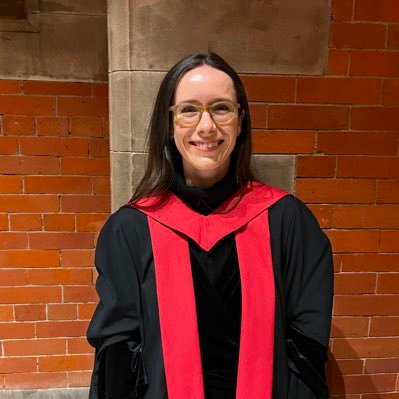
This post was written by contributing author, Dr. Alice de Galzain.
Ten years ago, in a review of Megan Marshall’s Margaret Fuller: A New American Life (2013) and John Matteson’s The Lives of Margaret Fuller: A Biography (2012), Fritz Fleischmann asked the following question: “why is [Margaret Fuller] still so little known?” (275). While welcoming the publication of these two phenomenal biographies, he regretted that “[t]here is no Margaret Fuller Memorial, no museum, no national holiday, not even a postage stamp” (275). Strictly speaking, Fuller’s cenotaph at Mount Auburn Cemetery can be considered a memorial and there was also a memorial pavilion put up on Fire Island in the early twentieth century that lasted about a decade, until a storm swept it away.[1] However, the kind of reverence that has always characterized the public reception of Ralph Waldo Emerson’s and Henry David Thoreau’s works—which is what I think Fleischmann is alluding to—has not been there for Fuller, whose name was rescued from oblivion by an amazing group of scholars in the 1970s and 80s.
In 2024, things are looking quite different. The recent updates to the Margaret Fuller Society online bibliography [now publicly available to view and download below and on our resources page] reflect the dynamic state Fuller studies are in today, showing that a tremendously vast amount of scholarly work has been produced on Fuller in recent years. It is a really exciting time for Fuller studies! In 2025, a Library of America edition of Fuller’s writings, edited by Noelle A. Baker, Megan Marshall, and Brigitte Bailey, will be published, and, in the years to follow, the Edinburgh Edition of the Collected Writings of Margaret Fuller, edited by Leslie E. Eckel, Sonia Di Loreto, and Andrew Taylor, will also come out. Symbolically very important, these two editions mark a crucial milestone in terms of the accessibility of Fuller’s writings.
In “A Short Essay on Critics,” Fuller defined the role of the “critic” as follows:
we feel the need of a criterion, of a standard; and then we say what the work is not, as well as what it is . . . . We do not seek to degrade but to classify an object by stating what it is not. We detach the part from the whole, lest it stand between us and the whole. When we have ascertained in what degree it manifests the whole, we may safely restore it to its place, and love or admire it there ever after. (8)
The body of critical work listed in the Fuller Society online bibliography—journal articles, monographs, edited collections, and dissertations—sheds light on the glories and limitations of Fuller’s work—on “what it is” and “what it is not.” It shows that, now more than ever, new perspectives are entering Fuller studies—queer, ecofeminist, decolonial, and pedagogical perspectives. The bibliography, which features works in English and other languages (a beautiful reflection of Fuller’s cosmopolitanism) and which we will continue to update, seeks to help graduate students, scholars, and members of the general public alike easily navigate and understand the current—and past—state of Fuller studies.
Works Cited
Fleischmann, Fritz. “Reading Margaret Fuller.” Resources for American Literary Study, vol. 37, 2014, pp. 275-88.
Fuller, Margaret. “A Short Essay on Critics.” Dial, vol. 1, no. 1, 1840, pp. 5-11.
[1] I owe these two remarks to Megan Marshall, who kindly reminded me of Fuller’s two memorials in an e-mail.
